
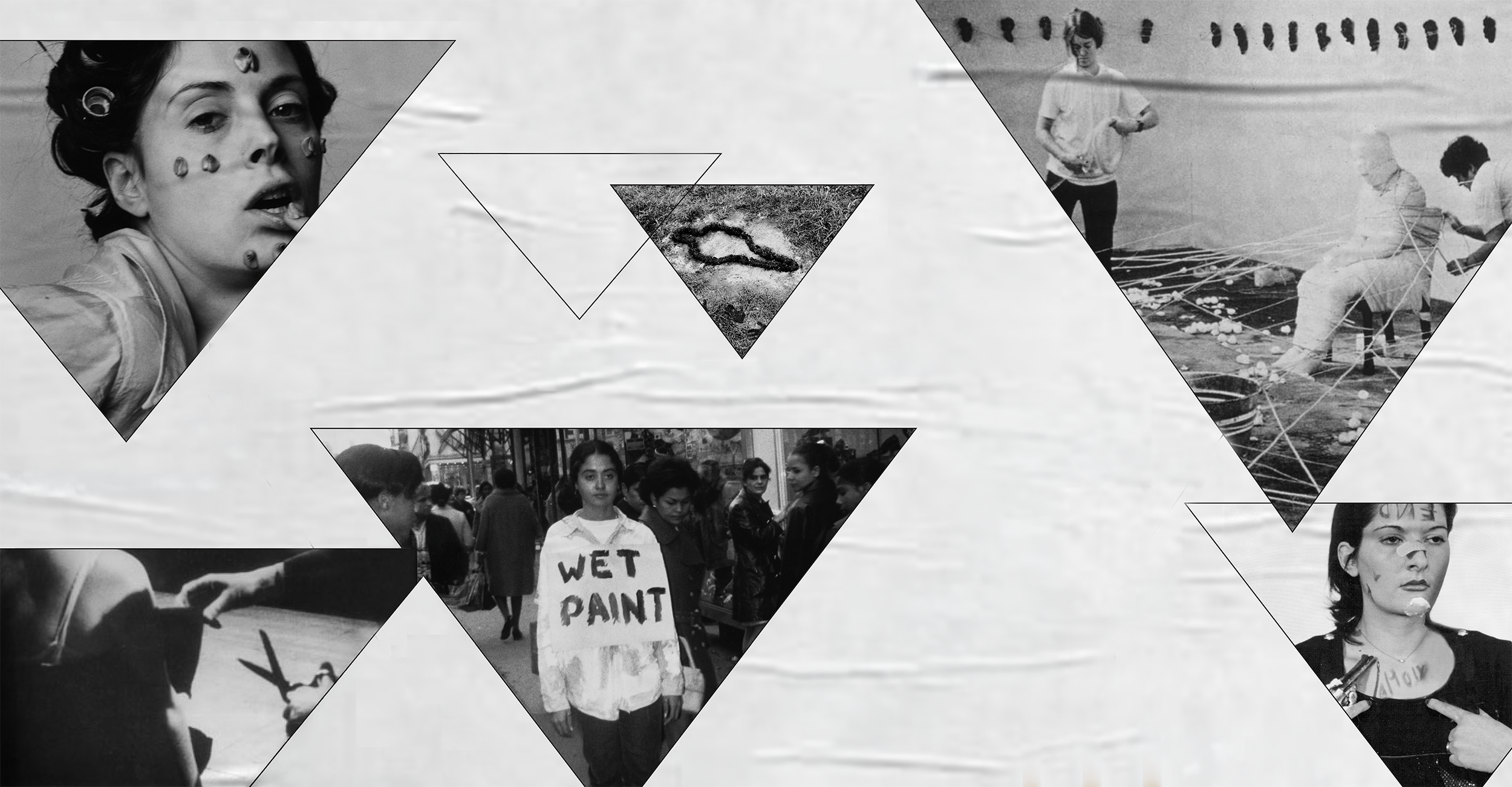
SCAR OF MIND
07.2020
An ode to the women who came before me—and a continuation of the space they fought to claim.
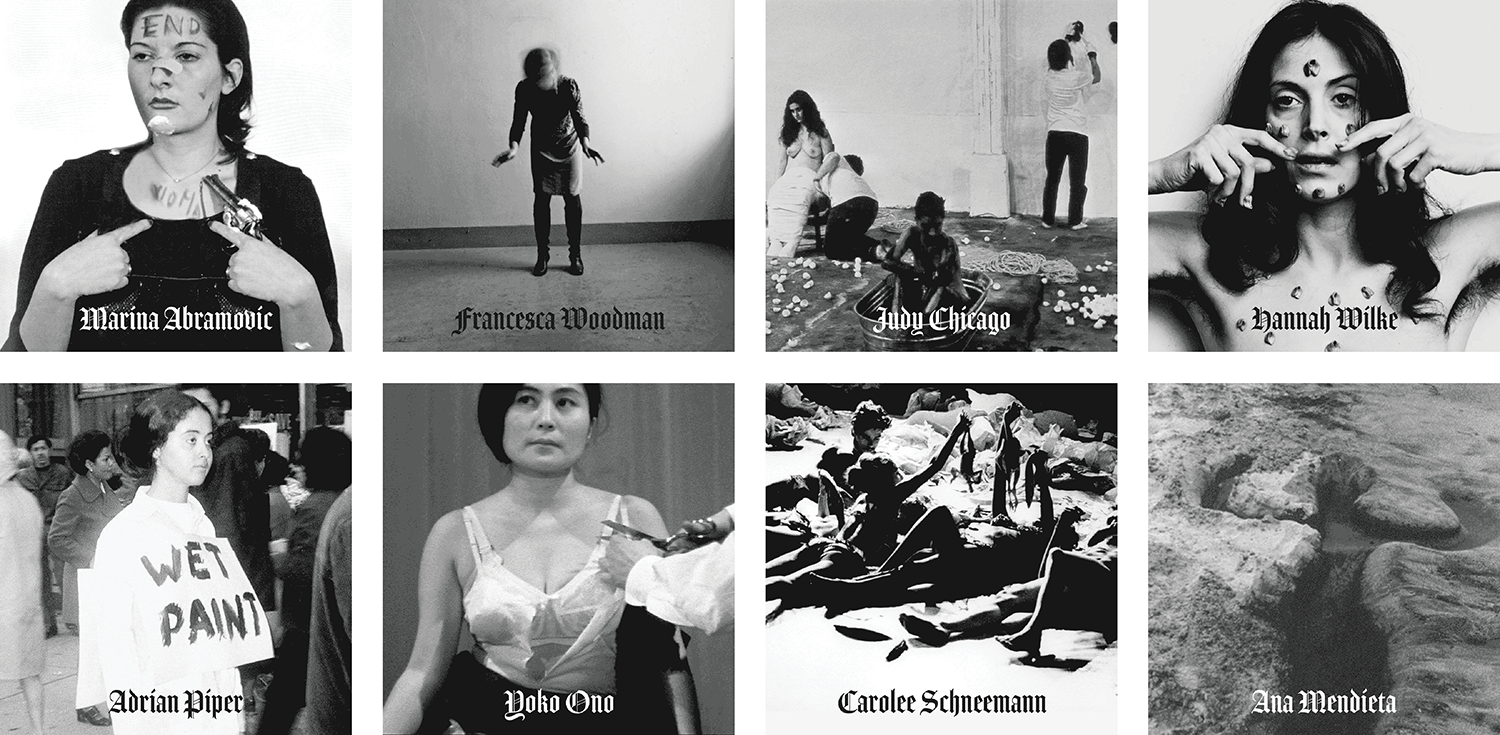
Scar of Mind celebrates eight pioneering women who used their art, voices, and bodies to challenge artistic convention and patriarchal expectations. Through editorial and environmental design, the project honors their courage and the freedom their work helped create for the women and artists who followed.
A thank-you card could never hold the depth of that gratitude, so I made this instead.
ROLE
Editorial Designer
Exhibition Designer
Researcher
CLIENT
Academic Project
TIMELINE
Eight Weeks
RESPONSIBILITIES
Historical Research
Creative Direction
Editorial Design
Publication Design
Exhibition Concept
Environmental Design
TEAM
Independent Project
SCOPE
Research
↓
Publication
↓
Exhibition Experience
The freedom I have to create, speak, and occupy space as a woman and an artist did not appear on its own.
Throughout the 1960s and 1970s, feminist performance artists confronted an art world built largely by and for men. Rather than seeking acceptance on its terms, they used their own bodies as medium and message—making the personal visible, giving physical form to their resistance, and demanding space for experiences that had long been diminished or excluded.
Scar of Mind is an ode to eight of those women. More than an effort to document their work, the project became an act of gratitude for the barriers they broke and the freedoms later generations inherited.
It created a space in which these women were not treated as footnotes to art history, but as the foundation for freedoms that can now feel easy to take for granted.
CONTEXT
↓ EDITORIAL MOCKUP
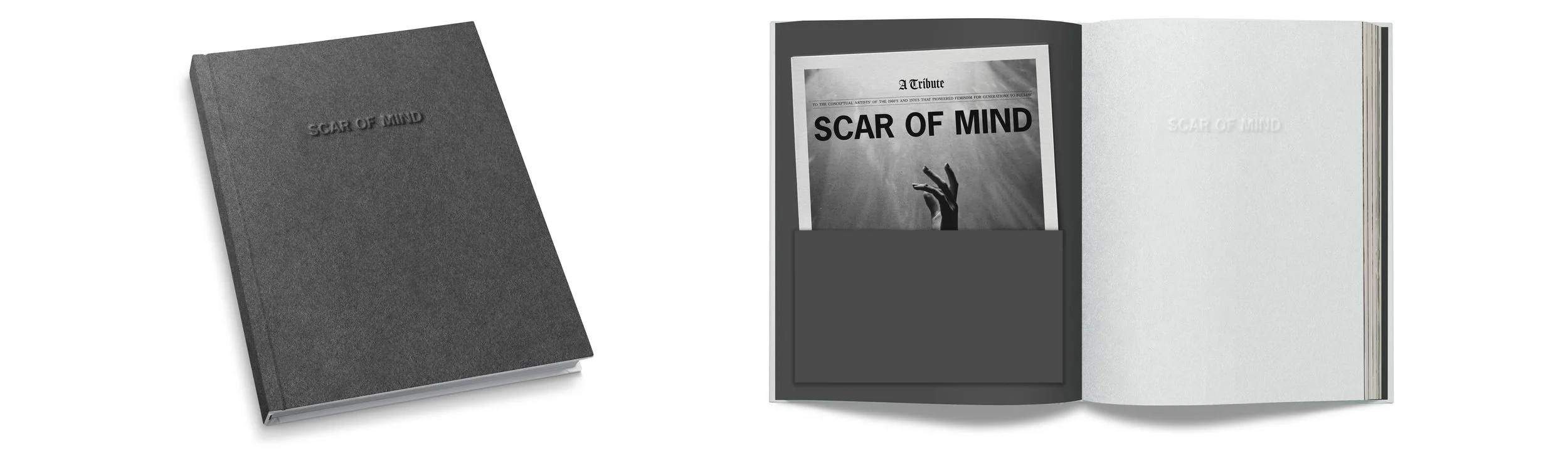
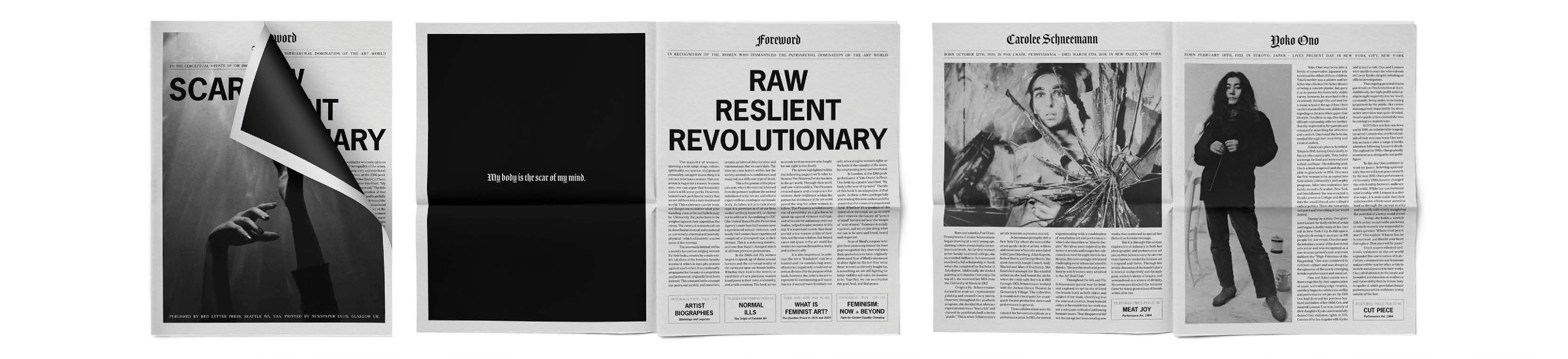
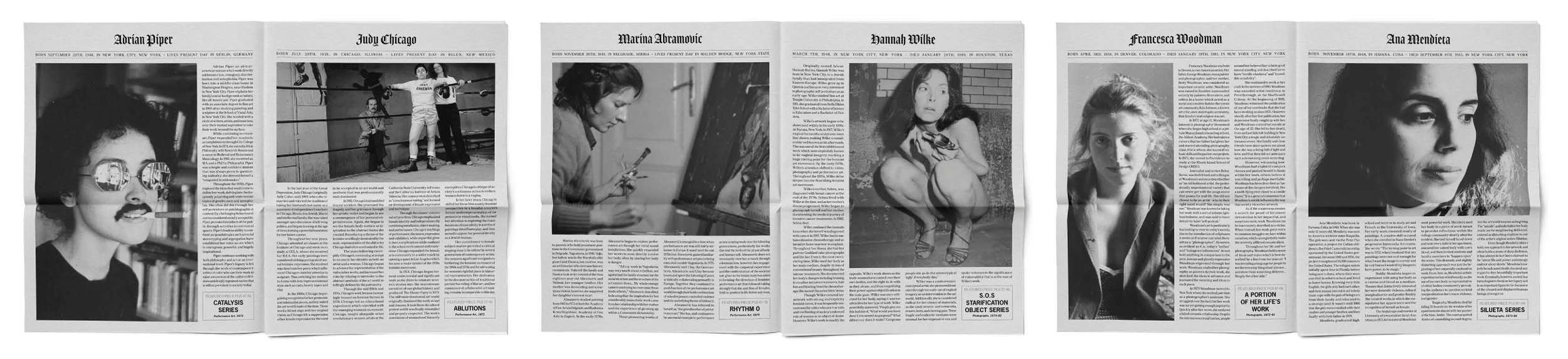
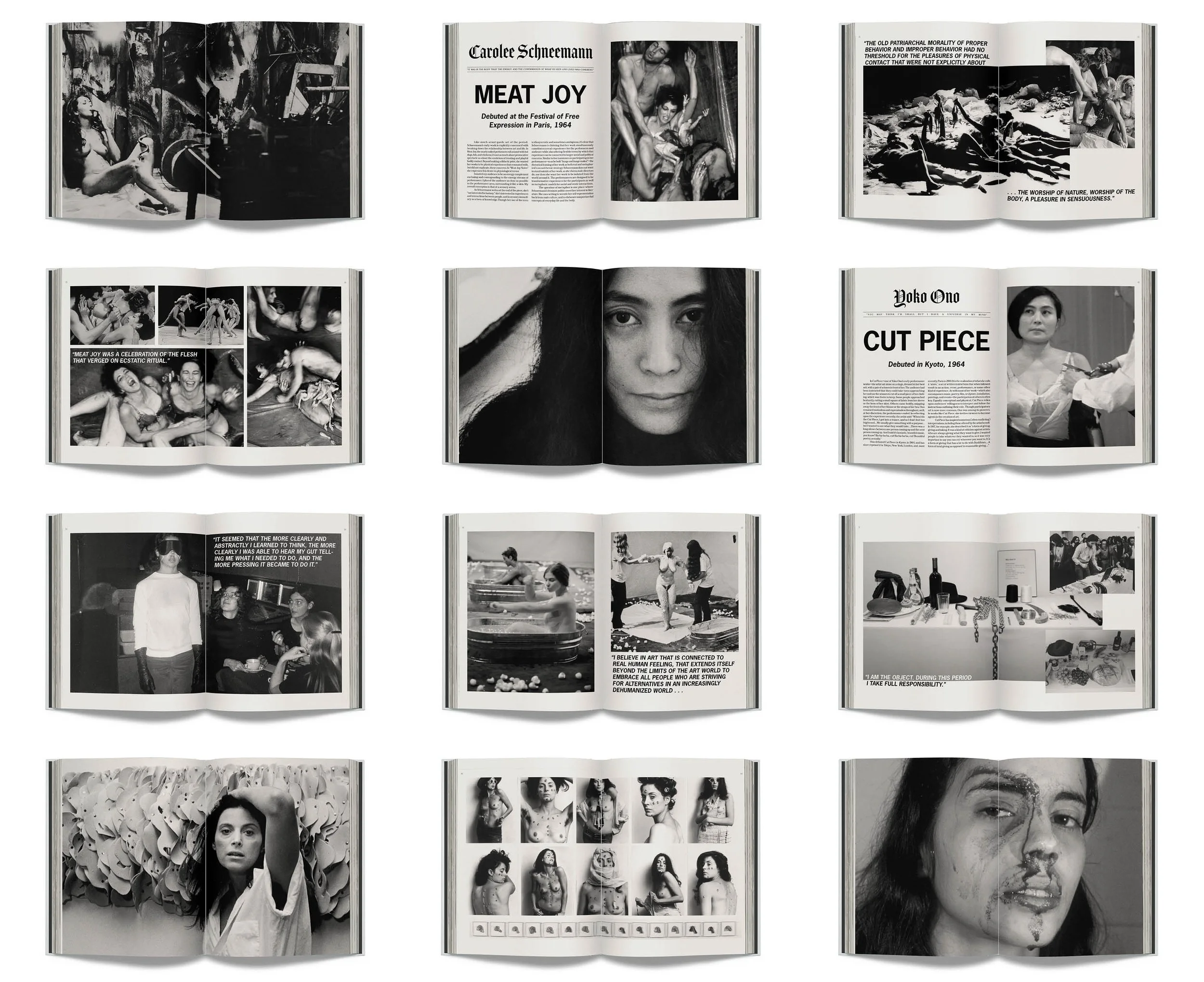
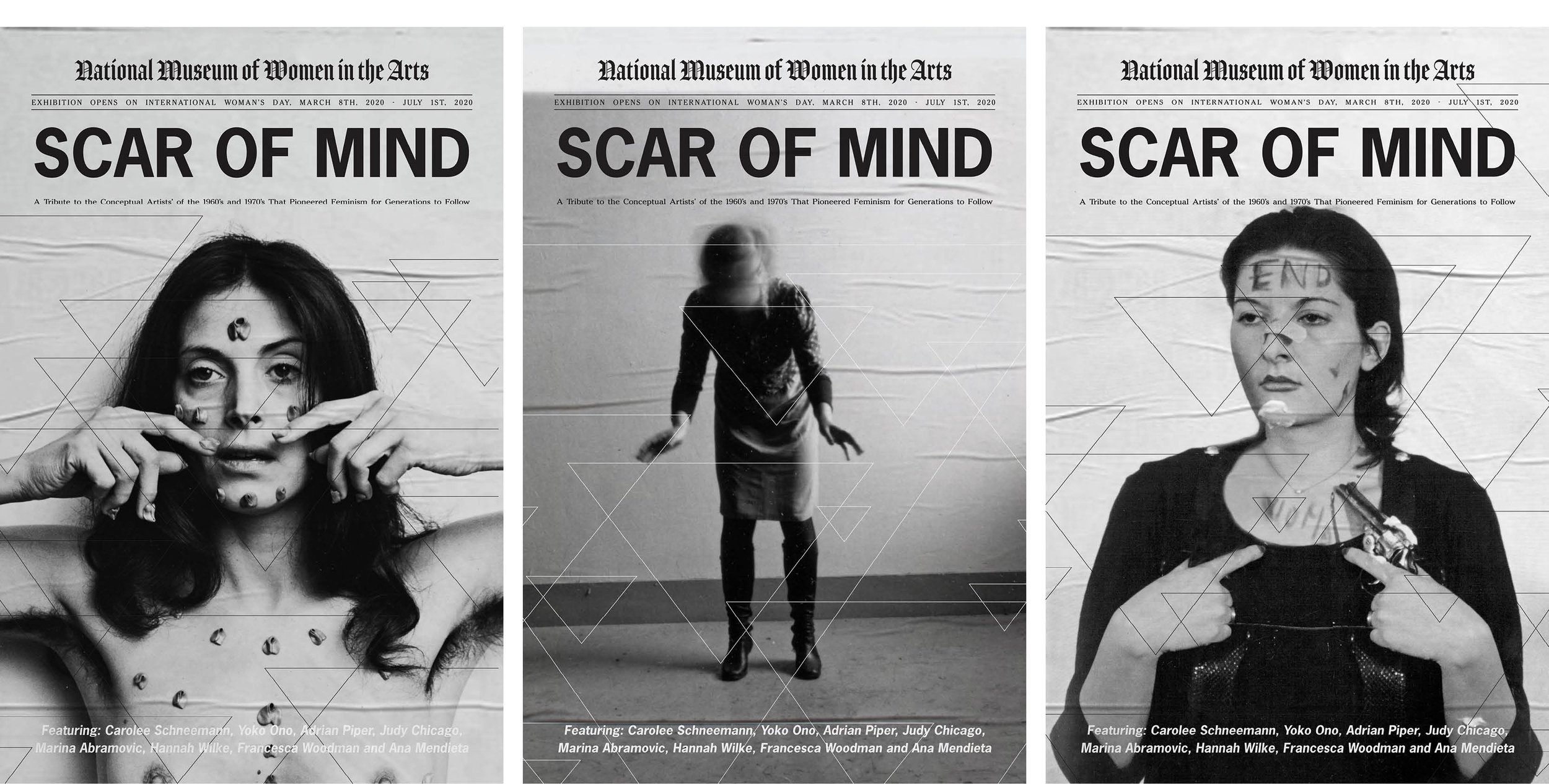
The editorial experience opened with a removable newsprint insert inspired by newspapers of the 1960s and 1970s. Functioning as both a table of contents and an archival artifact, it gave these women the front-page recognition they deserved but were so often denied.
Through biographies, historical context, and a feature tracing the emergence of feminist performance art, the insert situated the artists’ work within the world they were challenging.
GIVING THEM THE FRONT PAGE
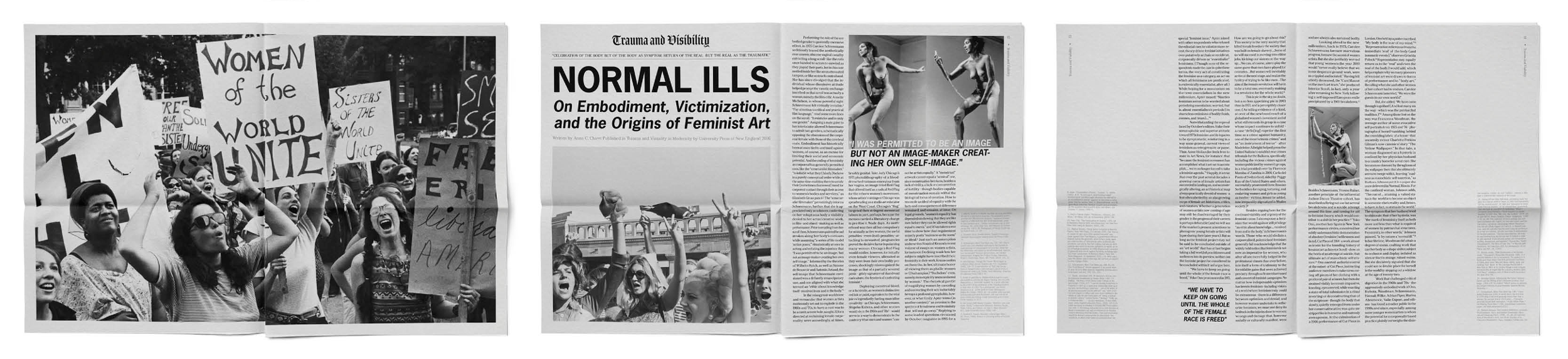
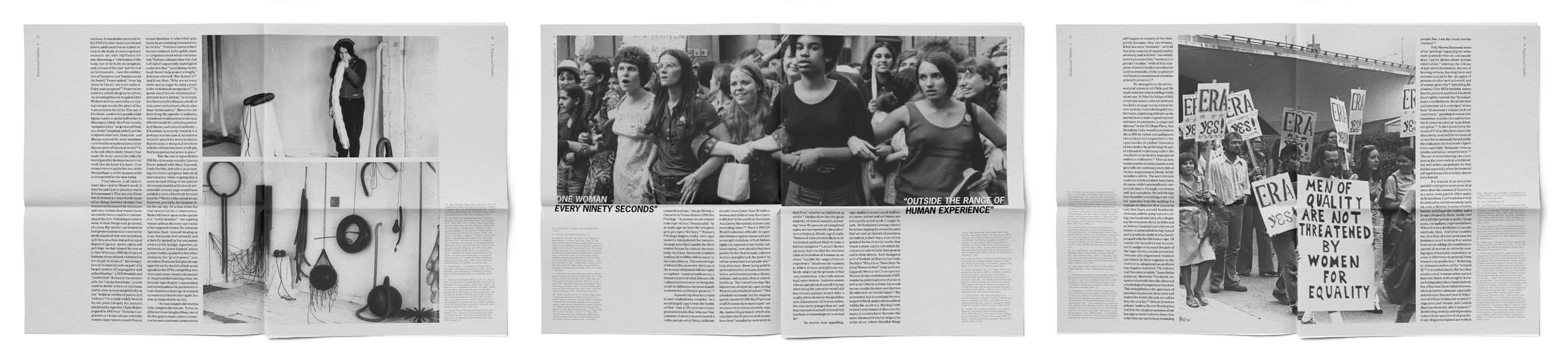
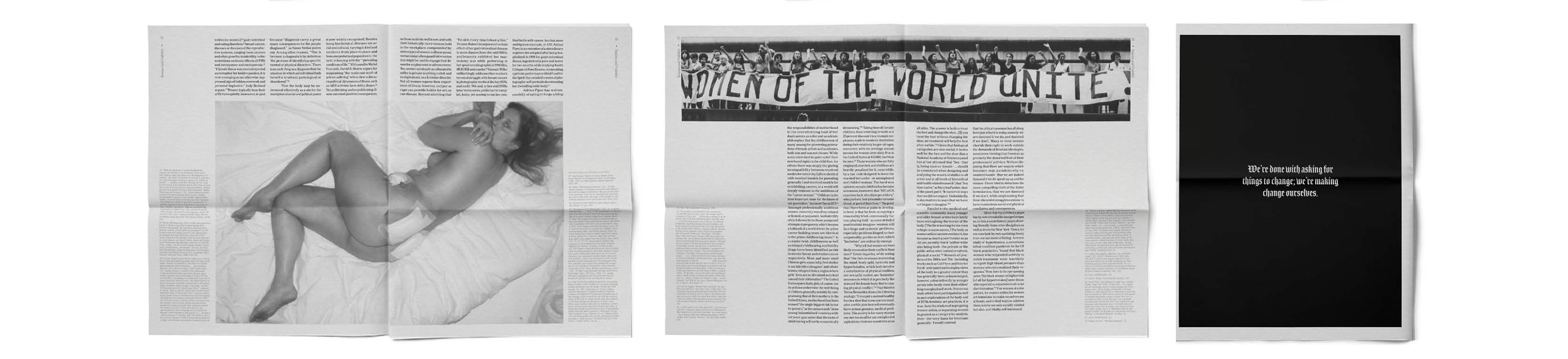
Beneath the insert, the publication shifted onto soft peach newsprint selected for its resemblance to skin.
The material acknowledged the body as a shared site of vulnerability, expression, and resistance. Although every artist spoke in her own voice, each used her physical presence to demand visibility. The publication itself became a tactile extension of that shared experience.
THE BODY AS THE MEDIUM
The publication was just the beginning of a larger imagined experience.
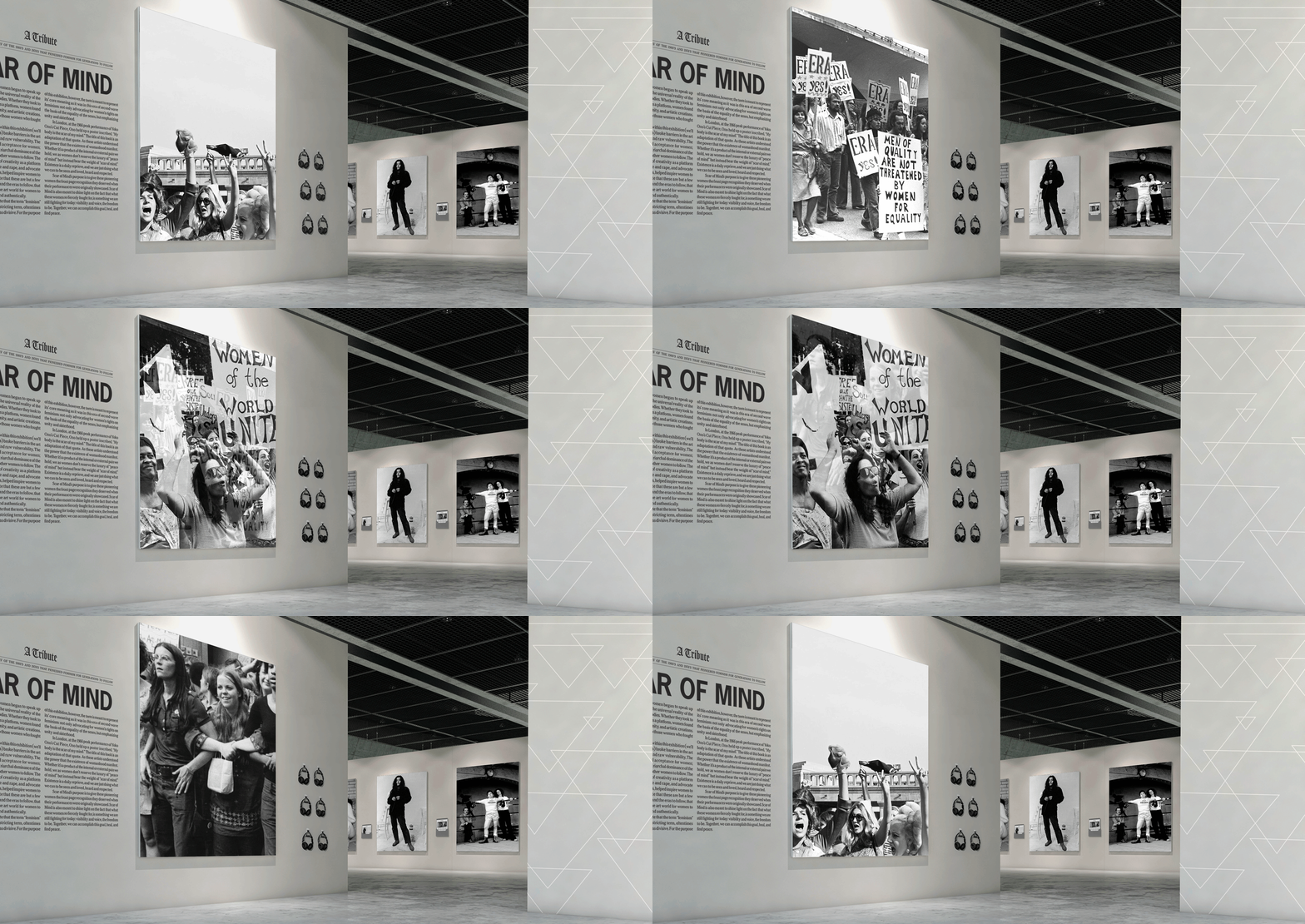
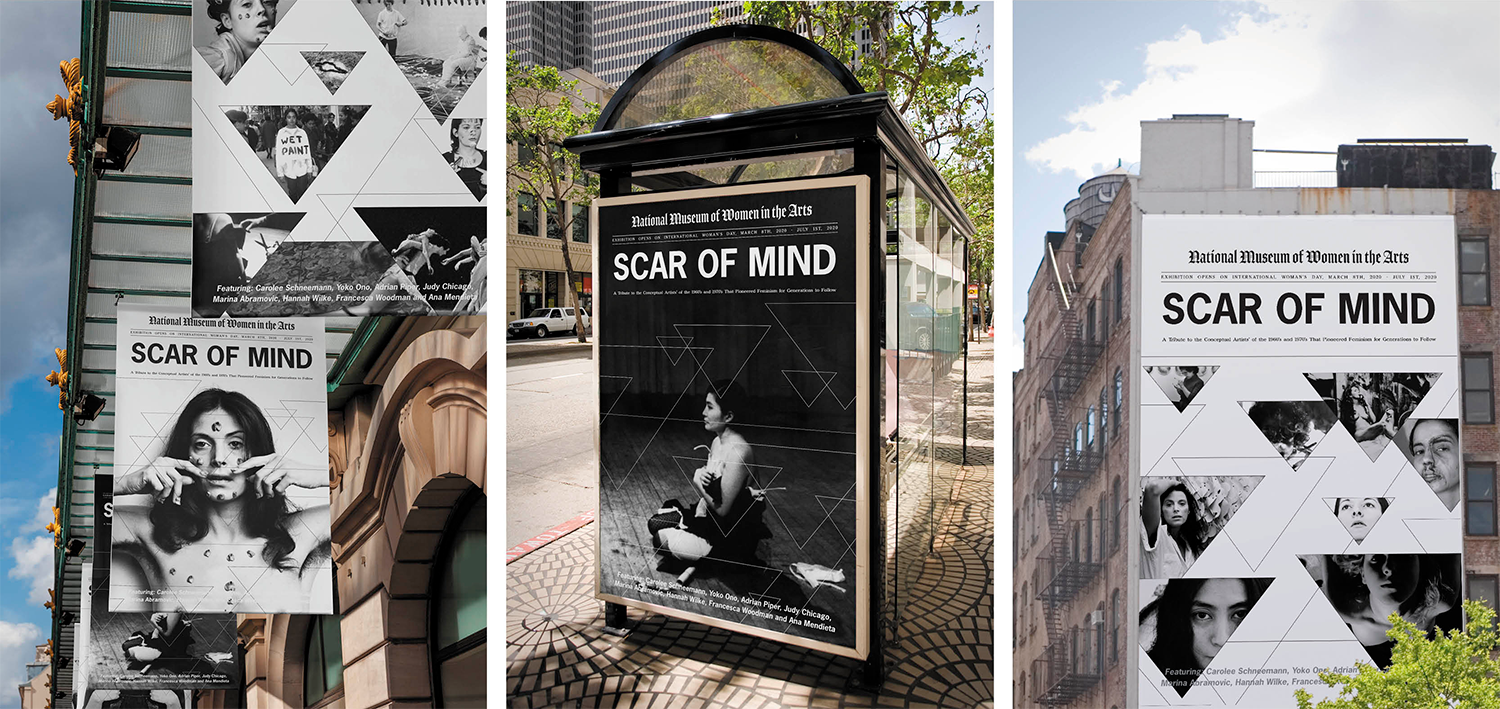
As the project developed, I considered how these histories could move beyond the page and occupy physical space. The publication expanded into a conceptual traveling exhibition where scale, sequence, and environment gave the artists’ work an even greater presence.
Larger-than-life imagery transformed their bodies from subjects historically scrutinized or constrained into monuments of autonomy and resistance. By allowing them to take up space at an imposing scale, the exhibition reflected the magnitude of their influence—and offered them the visibility and recognition they had always deserved.
FROM PAGE TO SPACE
↓ PROMO
↑ EXHIBITION
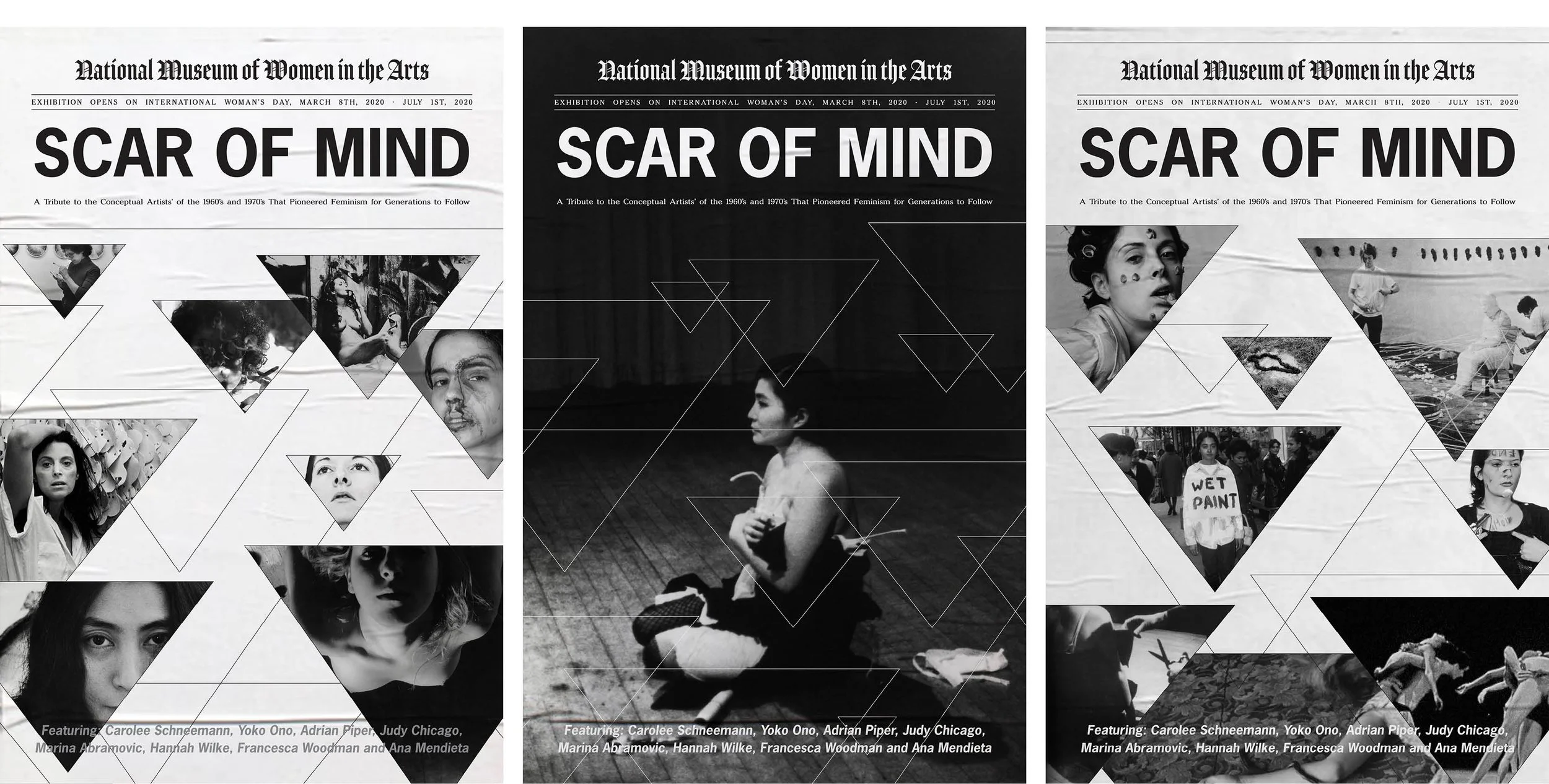
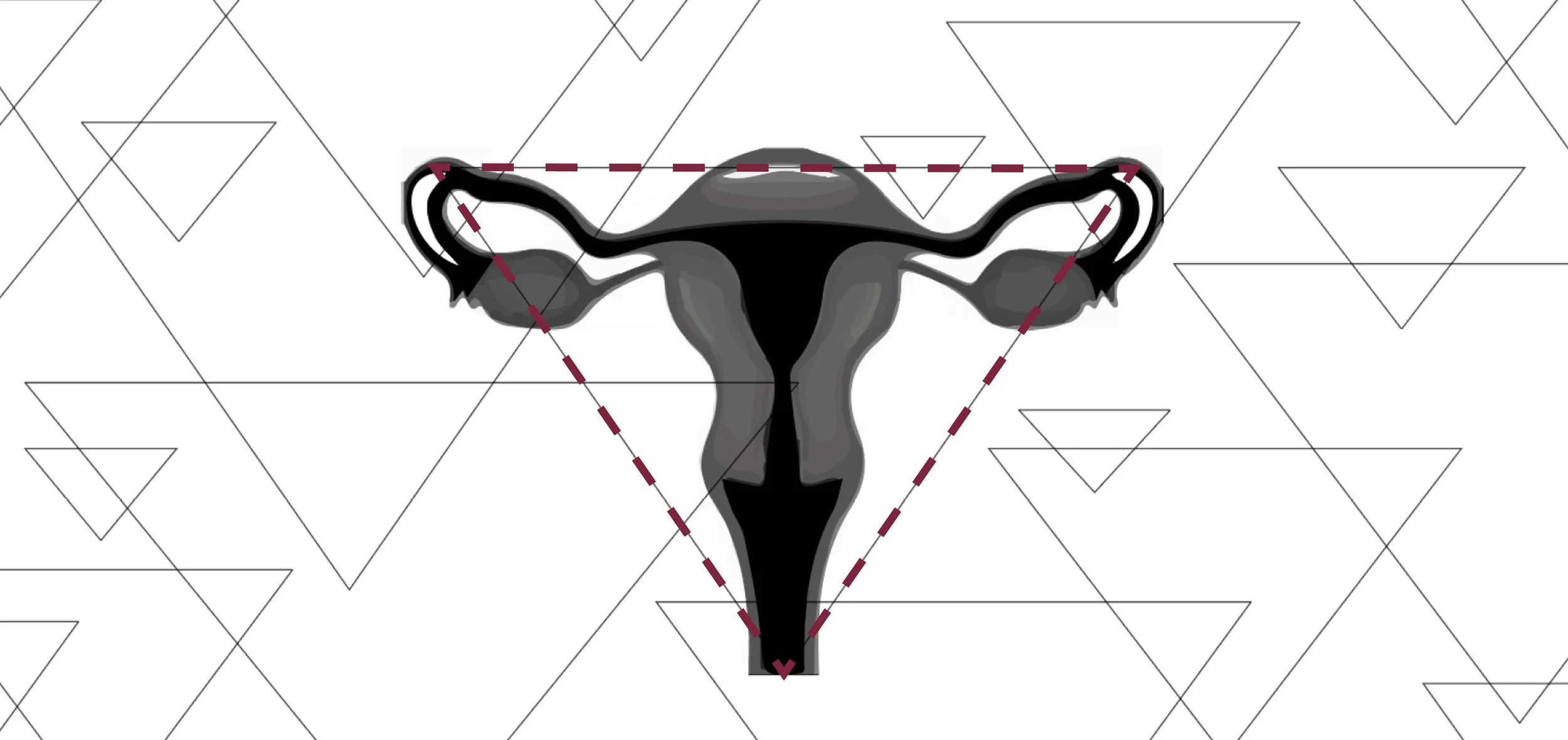
A recurring triangle motif connected the artists’ individual stories. The form began as an abstracted reference to reproductive anatomy—specifically the uterus and fallopian tubes—while its delicate line weight drew from Yoko Ono’s assertion that “the body is the scar of your mind.”
The motif came to represent the relationship between the physical and emotional: the ways our experiences leave marks that may be carried internally, expressed through the body, or transformed through art. Each triangle could stand independently, but together they became stronger—a reflection of eight distinct women connected through femininity, resilience, and resistance.
STRENGTH THROUGH CONNECTION
This project changed the way I understand my own place within design.
The freedom I have to make work, express an opinion, and occupy space as a woman and an artist was built by women who risked visibility before visibility was safe, accepted, or celebrated.
Scar of Mind taught me that design does not simply preserve information. It shapes how we remember, whose influence we recognize, and which stories continue forward.
That understanding still guides my practice today. Whether I am designing for a community, brand, or institution, I am drawn to work that gives overlooked voices room to be seen—and honors the people who made that room possible.
PERSONAL GROWTH
